Learn About the Law
Get help with your legal needs
FindLaw’s Learn About the Law features thousands of informational articles to help you understand your options. And if you’re ready to hire an attorney, find one in your area who can help.
Kathryn WALKER, Petitioner v. MERIT SYSTEMS PROTECTION BOARD, Respondent
This case concerns the deadline for a federal employee to file an individual right of action (“IRA”) appeal with the Merit Systems Protection Board (“Board”) under 5 U.S.C. § 1214(a)(3). The Board dismissed Kathryn Walker's appeal as untimely. We affirm.
Background
Ms. Walker worked for the Department of the Army (“Agency”) as a Transportation Specialist from December 2021 to April 2025. On January 23, 2023, the Agency proposed suspending her for ten days on the charge of “Conduct Unbecoming a Federal Employee.” App'x 27–31.1 That same day, Ms. Walker filed a whistleblower complaint with the Office of Special Counsel (“Special Counsel”). The Agency adopted the suspension proposal and implemented the ten-day suspension in May 2023.
On May 31, 2023, the Special Counsel notified Ms. Walker that it was terminating its investigation and would not seek corrective action on her behalf. On August 24, 2023, Ms. Walker filed an IRA appeal with the Board. On June 25, 2024, the administrative judge issued a timeliness order indicating the appeal appeared untimely and directing Ms. Walker to show timely filing or grounds for equitable tolling. Ms. Walker responded that her appeal was timely under 5 U.S.C. § 1214(a)(3)(B) and that equitable tolling was “inapplicable.” App'x 65–69.
On October 23, 2024, the administrative judge issued an initial decision dismissing the appeal as untimely, finding it was filed 24 days after the 60-day statutory deadline triggered by the Special Counsel's notice. Ms. Walker petitioned the Board for review, but because the Board lacked a quorum, the initial decision became the Board's final decision.
Ms. Walker timely petitioned this court for review. We have jurisdiction under 28 U.S.C. § 1295(a)(9).
Discussion
We must “affirm the board's decision to dismiss an untimely filed petition for review unless the decision is shown to have been arbitrary, an abuse of discretion, or otherwise not in accordance with law.” Olivares v. MSPB, 17 F.3d 386, 388–89 (Fed. Cir. 1994) (cleaned up).
The statutory provision at issue in this appeal, 5 U.S.C. § 1214(a)(3), is reproduced below in full, with relevant text in italics.
(3) Except in a case in which an employee, former employee, or applicant for employment has the right to appeal directly to the [Board] under any law, rule, or regulation, any such employee, former employee, or applicant shall seek corrective action from the Special Counsel before seeking corrective action from the Board. An employee, former employee, or applicant for employment may seek corrective action from the Board under [§] 1221, if such employee, former employee, or applicant seeks corrective action for a prohibited personnel practice described in [§] 2302(b)(8)[2] or [§] 2302(b)(9)(A)(i), (B), (C), or (D) from the Special Counsel and—
(A)
(i) the Special Counsel notifies such employee, former employee, or applicant that an investigation concerning such employee, former employee, or applicant has been terminated; and
(ii) no more than 60 days have elapsed since notification was provided to such employee, former employee, or applicant for employment that such investigation was terminated; or
(B) 120 days after seeking corrective action from the Special Counsel, such employee, former employee, or applicant has not been notified by the Special Counsel that the Special Counsel shall seek corrective action on behalf of such employee, former employee, or applicant.3
I
As noted above, Ms. Walker filed her whistleblower complaint with the Special Counsel on January 23, 2023. App'x 32–43. Under subparagraph (B), 120 days later, on May 23, 2023, Ms. Walker could have filed her IRA appeal to the Board without notification from the Special Counsel. She did not, however, and the Special Counsel issued its notification about a week later, on May 31, 2023. App'x 68. Under subparagraph (A), an employee has 60 days after the Special Counsel's notification to appeal to the Board. For Ms. Walker, that deadline was Monday, July 31, 2023. However, Ms. Walker filed her appeal on August 24, 2023—24 days late. App'x 21–26.
The Board dismissed Ms. Walker's appeal as untimely and noted that “she appear[ed] to agree that equitable tolling [was] not applicable.” App'x 5.
On appeal to this court, Ms. Walker argues that her IRA appeal to the Board was not untimely because the Special Counsel did not provide its notification until after the 120-day time period of § 1214(a)(3)(B). Pet'r’s Br. 8–9, 13–14. In Ms. Walker's view, if the Special Counsel issues its decision after the 120 days, the 60-day deadline of subparagraph (A) no longer applies. In other words, Ms. Walker argues that if the Special Counsel does not issue its decision within 120 days after the employee files with the Special Counsel, no statute of limitations applies to filing an IRA appeal to the Board.
In response, the government primarily relies on King v. Department of Health & Human Services, 71 M.S.P.R. 22 (M.S.P.B. 1996), in which the Board rejected this same argument because it led to an “absurd result” and “was inconsistent with principles of statutory construction and legislative intent.” Resp't’s Br. 12–14.
II
The plain language of the statutory provision, the context of the language in the same section, and the fact that Ms. Walker's interpretation of 5 U.S.C. § 1214(a)(3) leads to an absurd result, all dictate that Ms. Walker's interpretation is incorrect.
A
First, contrary to Ms. Walker's arguments, § 1214(a)(3)(B) does not squarely apply to her case. Subparagraph (B) applies if “such employee ․ has not been notified by the Special Counsel.” § 1214(a)(3)(B) (emphasis added). Here, Ms. Walker was notified by the Special Counsel that it would not take corrective action on her behalf on May 31, 2023. App'x 68. When the Special Counsel issued its notification, albeit after 120 days, the timing for appeal was no longer governed by subparagraph (B), but subparagraph (A), because “the Special Counsel notifie[d]” her that its “investigation ․ had been terminated.” § 1214(a)(3)(A).4 The purpose served by subparagraph (B) is to allow an employee who has not received a decision within 120 days to proceed before she receives such decision—not to allow unlimited time to appeal to the Board even after the Special Counsel's decision issues.5
B
The context of the surrounding statutory text also forecloses Ms. Walker's interpretation. “It is a fundamental canon of statutory construction that the words of a statute must be read in their context and with a view to their place in the overall statutory scheme.” Roberts v. Sea-Land Servs., Inc., 566 U.S. 93, 101 (2012); see also Transpacific Steel LLC v. United States, 4 F.4th 1306, 1322 (Fed. Cir. 2021) (“The whole-text canon calls on the judicial interpreter to consider the entire text, in view of its structure and of the physical and logical relation of its many parts.” (cleaned up)).
Immediately following the language at issue, § 1214(a)(4) dictates what actions the Special Counsel may take if the employee elects to appeal to the Board under subparagraph (B). “If an employee ․ seeks a corrective action from the Board ․ pursuant to the provisions of paragraph (3)(B), the Special Counsel may continue to seek corrective action personal to such employee ․ only with the consent of such employee.” § 1214(a)(4). That the Special Counsel may “continue to seek corrective action” after the 120-day time period of subparagraph (B) suggests that an employee's IRA appeal to the Board is governed by subparagraph (B) when the Special Counsel has not terminated its investigation. Id. (emphasis added).
In addition, the statute makes clear that the 120-day time period of subparagraph (B) is not a deadline the Special Counsel must meet because § 1214(b)(2)(A)(i) provides this deadline. The Special Counsel must “make a determination whether there are reasonable grounds to believe that a prohibited personnel practice has occurred” within “240 days.” § 1214(b)(2)(A)(i). If the Special Counsel chooses to use additional time beyond 120 days, subparagraph (B) permits the employee to separately appeal to the Board while the Special Counsel continues its investigation. § 1214(a)(4). Ms. Walker's interpretation improperly construes the 120-day time period of subparagraph (B) as a deadline that, if not met, provides an unlimited time to appeal to the Board. This interpretation is inconsistent with the remainder of the section. Subparagraph (B) mitigates the employee's wait while the Special Counsel remains silent and at work; it does not indefinitely extend the employee's time after the Special Counsel has spoken.
C
Finally, we agree that Ms. Walker's interpretation of the statute leads to an absurd result. Resp't’s Br. 13–14. “[I]nterpretations of a statute which would produce absurd results are to be avoided if alternative interpretations consistent with the legislative purpose are available.” Griffin v. Oceanic Contractors, Inc., 458 U.S. 564, 575 (1982); see also Milavetz, Gallop & Milavetz, P.A. v. United States, 559 U.S. 229, 252 (2010) (declining to “adopt a view of the statute that ․ would produce an absurd result”); Dupuch-Carron v. Sec'y of HHS, 969 F.3d 1318, 1330 (Fed. Cir. 2020). Interpreting legislation to have no statute of limitations is particularly disfavored. The Supreme Court emphasized that it “would be utterly repugnant to the genius of our laws” to allow actions to “be brought at any distance of time.” Adams v. Woods, 6 U.S. (2 Cranch) 336, 342 (1805); see also Gabelli v. SEC, 568 U.S. 442, 452 (2013).
Accordingly, we conclude that it was not Congress's intent to provide an unlimited amount of time for employees to file IRA appeals to the Board simply because the Special Counsel takes more than 120 days to issue its notification.
In cases where the Special Counsel notifies an employee that its investigation has been terminated and supplies such notification more than 120 days after the employee sought corrective action from the Special Counsel, 5 U.S.C. § 1214(a)(3)(A) requires the employee to file her IRA appeal before the Board within 60 days of the Special Counsel's notification. Once the Special Counsel acts, the 60-day deadline starts to run. Because Ms. Walker did not file her IRA appeal to the Board within this 60-day deadline, her appeal was untimely.
Because we affirm the Board's decision as to timeliness, we do not reach whether Ms. Walker was entitled to a hearing before the Board. Pet'r’s Br. 16. We also do not address equitable tolling because Ms. Walker waived the argument. Pet'r’s Br. 5 (stating that “the doctrine of equitable tolling was inapplicable”).
Conclusion
We have reviewed Ms. Walker's remaining arguments and find them unpersuasive. For the foregoing reasons, we affirm.
AFFIRMED
Costs
No costs.
FOOTNOTES
1. “App'x” refers to the appendix included with Ms. Walker's opening brief.
2. Ms. Walker's claim arises under § 2302(b)(8). App'x 39.
3. We do not address every aspect of the statute—only those raised by the Petitioner.
4. Because this case does not involve the scenario of the Special Counsel never providing notification to an employee, we do not address the deadline to appeal to the Board under that fact pattern.
5. To the extent Ms. Walker argues that subparagraph (B) asks only whether the employee had been notified by day 120 and any notice arriving afterward is irrelevant, the provision also precludes this reading. The conditions of § 1214(a)(3) must be satisfied when the employee files her IRA appeal. In subparagraph (A), whether “no more than 60 days have elapsed since notification was provided” is necessarily assessed at filing. Subparagraph (B) is no different. The condition of subparagraph (B) that the employee “has not been notified” is also assessed at filing. The “120 day[ ]” period merely sets the earliest date on which an employee may invoke subparagraph (B).
Per Curiam.
Thank you for your feedback!
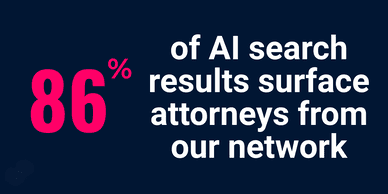
As the largest network of trusted legal brands, we help firms build authority across the platforms consumers and AI systems rely on most. Our network helps attorneys strengthen visibility, credibility, and preference where legal decisions begin.
Docket No: 2026-1456
Decided: November 13, 2026
Court: United States Court of Appeals, Federal Circuit.
Search our directory by legal issue
Enter information in one or both fields (Required)
Harness the power of our directory with your own profile. Select the button below to sign up.
Learn more about FindLaw’s newsletters, including our terms of use and privacy policy.
Make It a Preferred Google Search Source
Add to GoogleGet help with your legal needs
FindLaw’s Learn About the Law features thousands of informational articles to help you understand your options. And if you’re ready to hire an attorney, find one in your area who can help.
Search our directory by legal issue
Enter information in one or both fields (Required)