Learn About the Law
Get help with your legal needs
FindLaw’s Learn About the Law features thousands of informational articles to help you understand your options. And if you’re ready to hire an attorney, find one in your area who can help.
JPMorgan Chase Bank, N.A., Plaintiff, v. Fei Han, Defendant.
On or about July 18, 2023, JPMorgan Chase Bank, N.A. ("plaintiff" or "Chase") commenced this action against defendant Fei Han ("defendant" or "Han") to recover an unpaid credit card balance of $16,818.68 upon causes of action for breach of contract and an account stated. This balance included $13,475 in credit card charges, and the remaining balance of $3,343.68 for interest and late charges. A trial was held on June 16 and July 27, 2026. The principal issue is whether plaintiff established that three disputed purchases were authorized by defendant or made by a person with authority to use his account. For the reasons that follow, the complaint is dismissed.
Facts
Plaintiff called defendant as a hostile witness. Defendant testified that he opened the credit card account in 2014, used the card, and made payments through April 22, 2022, when he paid $334.95. He acknowledged that he added his wife, Chang Ting Yao ("Yao") as an authorized user in September 2017. He further testified that he and his wife were separated and in the process of obtaining a divorce. Defendant's testimony did not establish when the separation occurred in relation to the disputed purchases.
The disputed purchases were made on June 30, 2021: $8,690 at Tiffany & Co, $4,345 at VC Luxury Jewelers and $440 at Bryant and Cooper, totaling $13,475. Defendant denied making these purchases and testified that he telephoned plaintiff that day to dispute them. Plaintiff's fraud witness testified that defendant initially disputed the charges in July 2021. Although the witnesses differed as to the date of the initial report, their testimony established that defendant disputed the purchases shortly after they occurred and that plaintiff investigated them in July 2021.
Defendant filed a police report on October 18, 2021, identifying an unknown perpetrator and a period of loss between June 30 and August 31, 2021. On November 29, 2021, he telephoned plaintiff to request a letter identifying Yao as the person who had misused the card so that he could sue her. Defendant explained that this request was based on plaintiff's representation that his wife had made the disputed purchases. On June 10, 2026, after this action had been commenced, defendant filed an Identify Theft Report with the Federal Trade Commission. The filing of these reports establishes that defendant reported suspected identify theft; it does not, without more, establish who made the purchases.
Plaintiff called Barbara Barnhart, an associate vendor management analyst and custodian of records at Chase. Barnhart testified that plaintiff generated and mailed the monthly credit card statements (exhibit 5) in the ordinary course of business. Those statements documented defendant's use of the card and payments on the account, including payments made after the disputed purchases.
On the first day of trial, plaintiff also introduced five exhibits: the police report (exhibit 1); the card member agreement (exhibit 2); mailings concerning changes to the account terms (exhibit 3); defendant's credit card application (exhibit 4); and monthly account statements (exhibit 5).
On the second day of the trial, plaintiff sought to call Associate Fraud Manager Krystal Spaulding and introduce additional documents concerning Yao's authorized user status and the fraud investigation. Defense counsel objected because plaintiff had not disclosed before trial the identity of the witness or the documentary evidence she would present. This court permitted the testimony and exhibits over that objection.
Spaulding testified that Yao had been added as an authorized user and that the card-member agreement made defendant responsible for use of the account by an authorized user. She further testified that plaintiff concluded its investigation in August 2021 and determined that the purchases were not fraudulent. Exhibit 8 associated the three disputed transactions with card sequence number "002," which Spaulding identified as the card assigned to Yao. Spaulding could not identify the individual who conducted the investigation. She testified that Chase sent defendant a "finality letter" in August 2021 advising him that the charges were authorized, but that letter was not introduced into evidence.
The additional exhibits consisted of plaintiff's letter to defendant dated September 11, 2017 confirming that Yao had been added as an authorized user (exhibit 6); the results of an internal search of defendant's account history (exhibit 7); a ledger of account charges from June through November 2021 (exhibit 8); and letters dated September 14, 2023 and July 19, 2024 advising defendant that plaintiff continued to hold him responsible for the balance despite his fraud allegations (exhibit 9).
Analysis
Previously Undisclosed Witness and Documentary Evidence
This court's ruling allowing plaintiff to present a previously undisclosed witness and documentary evidence was based on its reading of 22 NYCRR 202.37. It provides: "At the commencement of the trial or at such time as the court may direct, each party shall identify in writing for the court the witnesses it intends to call, ... and shall provide a copy of such witness list to opposing counsel...The court may permit for good cause shown and in the absence of substantial prejudice, a party to call a witness to testify who was not identified on the witness list submitted by that party." Although this provision governs Supreme Court and County Court proceedings, this court finds that it applies by analogy to Civil Court proceedings pursuant to the principle of "Ubi eadem ratio, ubi eadum lex; et de similibus idem est judicium;" meaning that "[w]here the same reason exists, there the same law prevails; and, of things similar, the judgment is similar." Logan v. Gramley, 1992 U.S. App. LEXIS 27494, *2 (7th Cir. 1992). Furthermore, the ruling rests on the court's discretion to address late disclosure in light of the circumstances and the resulting prejudice. See, Krimkevitch v Imperiale, 104 AD3d 649, 649 (2d Dept. 2013); Guzman v Spring Cr. Towers, Inc., 63 AD3d 1105 (2d Dept 2009).
There was no showing that plaintiff's failure to identify Spaulding before trial was willful. Her proposed testimony concerned the authorized-user designation and fraud investigation, matters already central to the pleaded dispute. Although defense counsel's request for proof on the first day of trial did not excuse plaintiff's earlier non-disclosure, the testimony did not introduce a new theory of liability, and the court found that its admission would not cause substantial prejudice. Therefore, Spaulding was permitted to testify.
The documentary-disclosure objection requires separate consideration. Section 202.37 does not itself authorize the admission of undisclosed documents. Considering the documents' relationship to the existing issues and the absence of demonstrated willful non-disclosure, and finding minimal prejudice, this court declined to preclude exhibits 6 through 9. Their admission did not resolve the weight to be afforded them or relieve plaintiff of its burden of proof.
Causes of Action for Breach of Contract and Account Stated
To recover an outstanding credit card balance for breach of contract, a plaintiff must establish the governing agreement, the defendant's acceptance of its terms through use of the card and payments, and failure to make payments required by the agreement. Am. Express Natl. Bank v Zelkovitz, 241 AD3d 1226, 1227 (2d Dept 2025); American Express Natl. Bank v. Hoffman, 210 AD3d 1039, 1039-1040 (2d Dept. 2022). Plaintiff established the existence of a contractual relationship through the card member agreement, account records, and defendant's admissions. However, that proof does not resolve whether defendant was obligated to pay the charges attributable to the particular purchases he disputed.
"An account stated is an agreement, express or implied, between the parties to an account based upon prior transactions between them with respect to the correctness of account items and a specific balance due on them." Palisades Cleaning Servs., Inc. v. Bagatelle Little W. 12th, LLC, 245 AD3d 953, 954 (2d Dept. 2026); Citibank (South Dakota) N.A. v Cutler, 112 AD3d 573, 573-574 (2d Dept. 2013). To recover an outstanding balance based on a pleading of an account stated, plaintiff must show that it "generated monthly account invoices in the regular course of business, that it mailed them to the defendant on a monthly basis, and that the defendant accepted and retained those invoices without objecting to them within a reasonable period of time and made partial payment thereof." Bank of Am., N.A. v. McKeon, 241 AD3d 617, 618 (2d Dept. 2025).
At trial defendant raised the fact that plaintiff's Exhibit 5 did not contain proof of mailing. Barnhart's testimony concerning plaintiff's regular billing and mailing practices, together with the consistent address appearing in the account documents and statements, established a presumption of proper mailing. Am. Express Bank, FSB v Scali, 142 AD3d 517, 518 (2d Dept 2016). However, receipt of the statements did not establish defendant's agreement with charges that he promptly disputed. This court credits defendant's testimony that he disputed the purchases shortly after they occurred, a circumstance corroborated by plaintiff's investigation in July 2021. Establishing an account stated constitutes establishing an agreement between the parties regarding the correctness of the account and the balance due. Steven Cohn, P.C. v Freedman, 234 AD3d 801, 801 (2d Dept 2025); Citibank (S. Dakota), N.A. v Brown-Serulovic, 97 AD3d 522, 523 (2d Dept 2012). Accordingly, this court finds that plaintiff did not establish an account stated, and it cannot recover the claimed amount of $16,818.68 without additional proof.
Authorization of the Disputed Purchases
Pursuant to the Truth in Lending Act ("TILA"), 15 USCS § 1643(b), the issuer bears the burden of proving that use of a credit card was authorized. If the use was unauthorized, the issuer bears the burden of establishing the conditions permitting the cardholder's liability, as set forth in subsection 1643(a).1 These are alternative grounds of liability. An issuer that proves authorized use need not also establish the conditions governing liability for unauthorized use.
"Unauthorized use" means use of a credit card "by a person other than the holder who does not have actual, implied or apparent authority from the holder for such use and from which use the holder receives no benefit." 15 USCS § 1602(p); General Business Law § 511. Whether the user possessed authority is determined under applicable agency principles. Minskoff v. American Express Travel Related Servs. Co., 98 F.3d 703, 708 (2d Cir. 1996). An agent may bind a principal if they have actual authority, which may be express or implied, or apparent authority. Id. Actual authority exists where "the agent may reasonably infer from the words or conduct of the principal that the principal has consented to the agent's performance of a particular act." Id. Apparent authority exists when a reasonable third party may infer from the communications or conduct of the principal that the agent possesses authority to perform a particular act. Adler v. Solar Power, Inc., 2018 U.S. Dist. LEXIS 54771, *17 (S.D.NY 2018); Schwartz v WFG Natl. Tit. Ins. Co., 192 AD3d 713, 715 (2d Dept. 2021). Thus, misuse by an authorized user does not constitute "unauthorized use." 2 Debtor-Creditor Law § 15.04 (2026). See, Canfield Funding, LLC v. Focalpointe Group, LLC, 240 AD3d 1363, 1365-1366 (4th Dept. 2025) ("The principal may therefore be held liable in tort for the misuse by its agent of [their] apparent authority to defraud a third party who reasonably relies on the appearance of authority, even if the agent commits the fraud solely for [their] personal benefit, and to the detriment of the principal"). The principal's liability in a case of misuse by an authorized user "is based upon the fact that the agent's position facilitates the consummation of the fraud, in that from the point of view of the third person the transaction seems regular on its face and the agent appears to be acting in the ordinary course of the business confided to [them]." Am. Soc'y of Mech. Eng'Rs v. Hydrolevel Corp., 456 U.S. 556, 566 (1982); Canfield Funding, LLC v. Focalpointe Group, LLC, 240 AD3d 1363, 1365 (4th Dept. 2025).
Defendant acknowledged that he designated Yao as an authorized user, and exhibit 6 corroborated that designation. Thus, this court may infer from defendant's conduct and communications to the bank that Yao had actual and apparent authority to make purchases on the credit card. Defendant's separation from Yao, without evidence concerning the timing and effect of any revocation, does not establish that her authority had ended. Nor does defendant's denial that he personally made the purchases establish that they were unauthorized.
The remaining question is whether plaintiff proved that these purchases were made by Yao, defendant, or another person possessing the requisite authority. Plaintiff relied principally upon the ledger's association of the transactions with card sequence number "002," Spaulding's identification of that card as Yao's, and plaintiff's determination following its investigation. Those circumstances constitute evidence supporting plaintiff's position, but the court must assess their weight together with the remaining testimony and exhibits.
The ledger does not by itself establish who used the card on the occasions in question. Spaulding's testimony identifying the assigned cardholder did not supply the missing connection between that designation and the individual who made the purchases. Although she testified that plaintiff determined there was no fraud, there was an evidentiary gap to the extent she could not identify the investigator, and the August 2021 letter explaining plaintiff's contemporaneous determination was not introduced. The later letters establish plaintiff's continued position that defendant owed the balance; this court does not regard that position, without a persuasive evidentiary explanation of the disputed transactions, as establishing authorization.
Defendant's request for a letter identifying Yao as the purchaser does not compel a contrary finding. Defendant explained that he sought the letter because plaintiff had attributed the purchases to her. This court credits that explanation and does not construe the request as an admission based upon defendant's personal knowledge that Yao made the purchases. Considering the testimony and evidence as a whole, including reasonable inferences from the records presented, this court finds that plaintiff failed to prove by a preponderance of the evidence that the disputed purchases were authorized.
Furthermore, this court finds that the conditions of limited liability in the amount of $50 for the unauthorized use of a credit card, as set forth in subsection 1643(a), have not been satisfied. In particular, plaintiff tried to establish that Yao made the purchases by presenting a ledger identifying the purchaser of the disputed items as sequence "002." This court finds that this does not meet the requirement of 15 USCS § 1643(a)(1)(f) the card issuer provide a "method whereby the user of such card can be identified as the person authorized to use it." 15 USCS § 1643(a)(1)(f). Nor did not the testimony of Barnhart or Spaulding establish a concrete method of conclusively identifying the user.
Conclusion
For the foregoing reasons, judgment is granted in favor of defendant dismissing the complaint. This constitutes the decision and order of the court.
Dated: October 21, 2026
Hon. Tehilah H. Berman
Judge of the Civil Court, Kings County
FOOTNOTES
1. Section 1643(a)(1) provides: (1) A cardholder shall be liable for the unauthorized use of a credit card only if— (A) the card is an accepted credit card; (B) the liability is not in excess of $50; (C) the card issuer gives adequate notice to the cardholder of the potential liability; (D) the card issuer has provided the cardholder with a description of a means by which the card issuer may be notified of loss or theft of the card, which description may be provided on the face or reverse side of the statement required by section 127(b) [15 USCS § 1637(b)] or on a separate notice accompanying such statement; (E) the unauthorized use occurs before the card issuer has been notified that an unauthorized use of the credit card has occurred or may occur as the result of loss, theft, or otherwise; and (F) the card issuer has provided a method whereby the user of such card can be identified as the person authorized to use it. 15 USCS § 1643.
Tehilah H. Berman, J.
Thank you for your feedback!
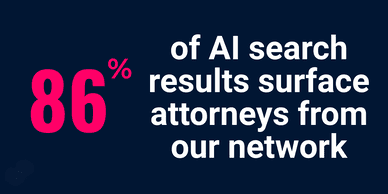
As the largest network of trusted legal brands, we help firms build authority across the platforms consumers and AI systems rely on most. Our network helps attorneys strengthen visibility, credibility, and preference where legal decisions begin.
Docket No: Index No. cv-012452-23 /ki
Decided: October 21, 2026
Court: Civil Court, City of New York.
Search our directory by legal issue
Enter information in one or both fields (Required)

Harness the power of our directory with your own profile. Select the button below to sign up.

Learn more about FindLaw’s newsletters, including our terms of use and privacy policy.
Make It a Preferred Google Search Source
Add to GoogleGet help with your legal needs
FindLaw’s Learn About the Law features thousands of informational articles to help you understand your options. And if you’re ready to hire an attorney, find one in your area who can help.

Search our directory by legal issue
Enter information in one or both fields (Required)